


Time:2025-12-12 Views:1 source:News
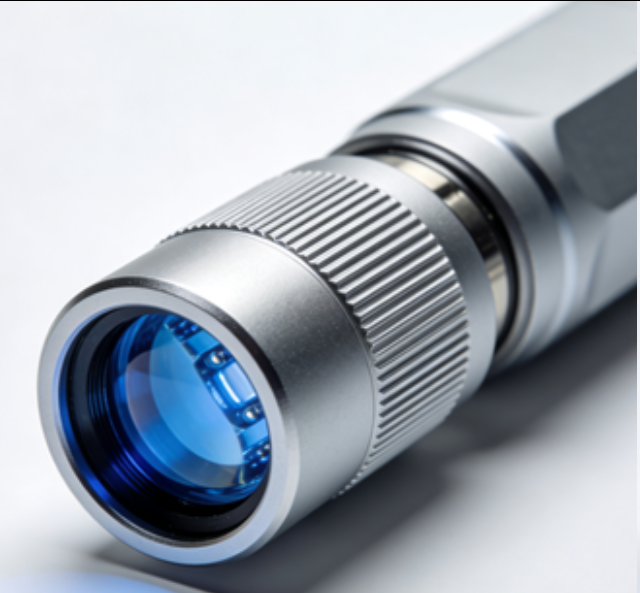
A laser equipment probe is a specialized sensing device integrated with laser technology to measure, align, or detect targets with ultra-high precision—used in laser-based systems such as laser cutting machines, laser engravers, laser scanners, and laser metrology tools. Unlike traditional mechanical probes, laser equipment probes use non-contact laser beams to gather data, eliminating physical wear, reducing target damage, and enabling measurements of delicate or moving objects. This makes them ideal for industries like aerospace, electronics manufacturing, medical device production, and precision engineering, where micron-level accuracy is non-negotiable.
The core technology of a laser equipment probe relies on laser triangulation, time-of-flight (ToF), or interferometry principles, depending on the application. Laser triangulation probes emit a laser beam onto the target; the reflected beam is captured by a photosensitive detector (e.g., a CCD or CMOS sensor), and the probe calculates the target’s position or distance based on the angle of the reflected beam—achieving accuracy down to 1–10 microns. ToF probes measure the time it takes for a laser pulse to travel to the target and back, making them suitable for long-distance measurements (up to several meters) in applications like laser radar (LiDAR) for 3D scanning. Interferometry-based probes use the interference of laser waves to measure extremely small displacements (down to nanometers), critical for semiconductor manufacturing or optical component testing.
Key functionalities of laser equipment probes include precision alignment, surface profiling, and real-time feedback. In laser cutting machines, a laser probe aligns the cutting head with the target material (e.g., a metal sheet) to compensate for material warpage, ensuring clean, accurate cuts. In 3D laser scanners, probes capture millions of data points to create detailed 3D models of objects—used in aerospace to inspect turbine blades or in heritage preservation to digitize artifacts. Many laser equipment probes also provide real-time feedback to the laser system’s controller: for example, a probe in a laser engraver can detect variations in material thickness and adjust the laser’s focus or power automatically, ensuring consistent engraving quality.
Performance advantages of laser equipment probes include non-contact operation, high speed, and environmental resilience. Non-contact measurement avoids scratching or deforming delicate targets like silicon wafers or medical implants. High measurement speeds (up to 10,000 points per second) enable real-time monitoring of fast-moving processes, such as laser welding on an automotive assembly line. Additionally, many probes feature ruggedized designs (IP67 or IP68 ratings) to resist dust, moisture, or oil in industrial environments, and they are immune to electromagnetic interference (EMI)—critical in electronics factories with high EMI levels.
Practical applications of laser equipment probes drive innovation in precision industries. In semiconductor manufacturing, a laser interferometry probe measures the flatness of silicon wafers to ensure they meet the strict standards for chip production. In medical device manufacturing, a laser triangulation probe inspects the dimensions of tiny components like catheter tips, ensuring they are safe for use in the human body. In aerospace, a ToF-based laser probe scans the surface of aircraft wings to detect defects like cracks or dents that are invisible to the naked eye. While laser equipment probes require periodic calibration with reference standards to maintain accuracy, their ability to deliver micron-level precision makes them irreplaceable in industries where quality and precision define success. For any laser-based system requiring high-accuracy measurement or alignment, a laser equipment probe is a critical component.
Read recommendations:
Magnetic connector for automotive electronics
Purchase price of Pogo Pin Connector


159-2067-7287 Mr. Wan

0769-86006029

No. 5, Zhenrong Road, Wusha, Chang'an Town, Dongguan City
 Whatapp
CopyRight © 2024 Dongguan Yongtan New Energy Co., Ltd. All Rights Reserved


 CN
CN
 Home >